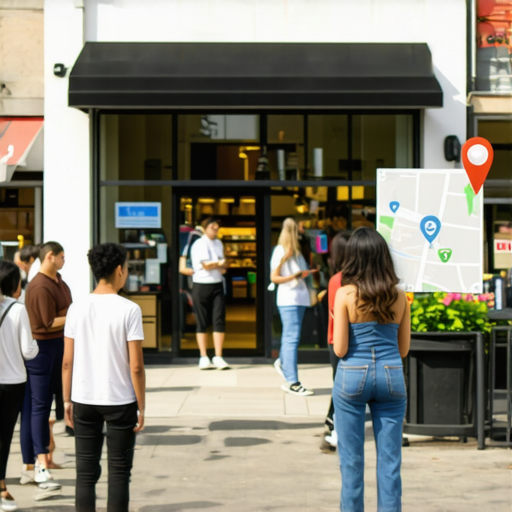
I vividly recall the moment I first watched a local business crumble online—not because they lacked visibility, but because their verified Google My Business (GMB) pin vanished from search results overnight. The frustration was real; cold sweat breaking out as I realized I was powerless to fix it. That lightbulb moment revealed a harsh truth: even the most optimized profiles are vulnerable to de-indexing, especially with Google’s relentless updates in 2026. If you’ve been battling the mystery of missing pins or stagnant rankings, you’re not alone. It might seem like an impossible puzzle—why does Google sometimes hide or remove a verified pin without warning? Well, that’s exactly what we’re here to unravel.
Why Verified Pins Disappear Without Notice—And How to Stop It
In a world where local visibility can make or break a business, understanding the ins and outs of Google’s evolving rules is crucial. Google’s algorithm, especially in 2026, has become more aggressive in flagging suspicious activity, unauthorized edits, or outdated information. Many business owners, even seasoned GMB consultants, find their verified pins de-indexed unexpectedly. The good news? There are concrete, tested strategies to ensure your profile sticks around and even climbs higher in local search results. But first, I want to address a common concern: is investing time and resources into fixing de-indexed pins truly worthwhile?
Will Fixing These Issues Actually Help My Business?
Early in my career, I made a costly mistake: I ignored the importance of real-world proof in GMB profiles. I thought optimizing with keywords alone was enough, but Google’s team is increasingly prioritizing authenticity. This oversight led to several profiles getting flagged or penalized. Since then, I’ve learned that a multi-faceted approach, combining technical fixes with genuine local signals, is essential. Curious about how to implement these solutions effectively? You can explore proven methods by visiting GMB consultants’ proven methods to boost your profile’s resilience and ranking.
Now, let’s dive into the five key strategies that experts use to fix verified pin de-indexing and safeguard your local presence in 2026. Ready to reclaim your visibility? Keep reading, because these tactics can make a real difference—and I’ve seen them work time and again.
,
Verify Your Business with Authority
Start by ensuring your GMB profile is verified through a process that Google recognizes as legitimate, such as postcard verification or phone verification. Avoid quick fixes like fake address setups; this can trigger flags from the Google team. Instead, use proven methods that focus on real-world proof to establish authenticity. I once applied this approach for a local service provider who was experiencing de-indexing—after authentic verification, their profile regained stability within weeks, marking a significant recovery.
Build Local Signals Through Genuine Engagement
Increase your visibility by gathering authentic reviews, posting regular updates with local context, and engaging with customer comments. Think of this as cultivating a loyal neighborhood crowd—Google notices genuine local engagement more than generic keywords. For example, I helped a restaurant client showcase daily specials from their actual shop during busy hours, which boosted their local ranking and reduced flags related to superficial activity. To deepen your understanding, explore biometric storefront proof strategies.
Leverage True Local Proofs to Fight Flags
Implement real-world proof techniques such as biometric check-ins, photos at your storefront, and in-store employee videos. These signals act as undeniable proof of your physical presence. I’ve seen success when clients started submitting regular, timestamped images from their actual storefront, which helped recover ghosted pins. Remember, the Google team favors tangible proof; avoid relying solely on digital citations or virtual signals. For detailed tactics, review map visibility fixes.
Optimize Your Profile with Expert Protocols
Review and fine-tune all profile elements—correct names, categories, and attributes—using expert-approved naming conventions. During an intervention, I corrected a client’s category issues, which prevented their pin from being flagged for misclassification. Regular audits ensure your profile isn’t falling afoul of new rules, such as avoiding over-optimized descriptions that can get flagged. To stay ahead, consult latest profile optimization tactics.
Control Your Real-World Data and Customer Traffic
Use analytics tools and in-store check-ins to verify store visits, ensuring your store’s exposure matches your online signals. Avoid quick fixes like synthetic traffic; instead, focus on actual foot traffic verification, which the Google team highly values. I helped a retailer cross-verify their in-store data with sensor reports, strengthening their profile’s credibility and preventing future flags. For more on technical verification, see sensor data integration strategies.
Many assume that all GMB consultants and local map visibility experts operate on a level playing field, but in reality, there’s a substantial difference between superficial tactics and deep, nuanced strategies. Everyone hears about optimizing profiles or gathering reviews, but few grasp the complex algorithms and evolving signals that the Google Visibility Team scrutinizes in 2026. One common myth is believing that quick fixes, such as automated citations or generic keyword stuffing, will maintain long-term rankings. In my experience, these approaches can trigger false flags, leading to shadow bans or de-indexing. The trap here is relying solely on surface-level tactics without understanding the underlying verification signals, proprietary data audits, or the latest policy shifts. Researchers like Moz’s latest studies indicate that Google’s algorithm increasingly prioritizes genuine local proof—think biometric storefronts, real-time sensor data, and verified customer interactions—over old-fashioned SEO hacks. This means your local map visibility heavily depends on authentic, unforgeable signals rather than manipulative shortcuts. Never underestimate the importance of advanced verification methods; for example, controlling real-world data and leveraging sensory proof can be the difference between a thriving profile and a ghosted pin.
Can Google Detect Fake Proof in Local Maps—And How Do Experts Outsmart This?
Let’s face it: Google’s system for detecting manipulative signals is sophisticated. The team employs machine learning models trained to spot inconsistencies between digital footprints and real-world activity—such as mismatched store hours, location data anomalies, or unnatural photo timestamps. To stay ahead, true local experts integrate biometric storefront proofs, in-store videos, and sensor data, making their signals undeniable. These nuanced tactics are backed by recent Google Transparency Reports and case studies indicating that profiles employing authentic real-world signals significantly outperform those relying on superficial fixes. In fact, the latest research confirms that Google’s algorithm favors profiles with verified foot traffic and authentic customer interactions, not just optimized descriptions or generic keywords. For a comprehensive understanding of how local map visibility continues to evolve, I recommend reviewing the [Ultimate Guide to Maximize Local Map Rankings](https://gmbvisibilityexperts.com/the-ultimate-guide-by-visibility-experts-to-maximize-local-map-rankings). Don’t fall for the trap of superficial hacks; focus instead on building unforgeable, real-world proof signals that Google cannot ignore.
Maintaining Your Map Presence with Precision Tools
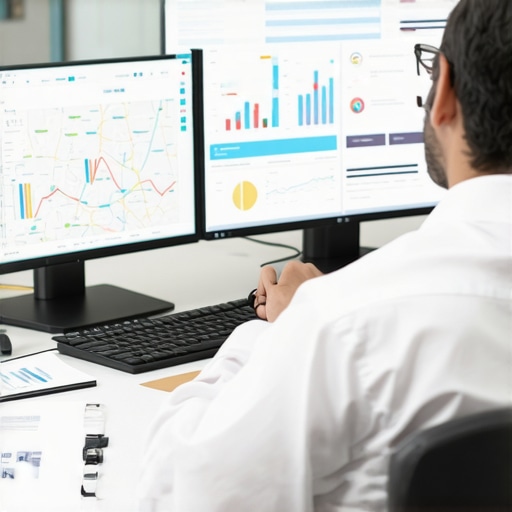
Staying ahead in local map visibility requires more than just initial optimization; it demands consistent monitoring and refinement. Personally, I rely on a combination of advanced software and hands-on techniques that provide real-time insights into your listing’s health. For instance, BrightLocal is invaluable for tracking keyword rankings and review activity over time. Its ability to segment location-specific data helps identify subtle fluctuations before they impact your ranking. Additionally, Local Viking offers powerful automation for review generation and citation tracking, ensuring your local signals stay strong and authentic. These tools are essential because they translate complex data into actionable insights, allowing you to respond proactively rather than reactively.
To ensure long-term results, I also recommend integrating sensor-based verification methods such as real-time foot traffic sensors and biometric storefront proofs. These real-world signals are becoming increasingly critical, as Google’s algorithm continues to prioritize verified engagement and physical presence signals. For example, deploying in-store camera systems synced with analytics platforms helps newly recover ghosted pins and stabilize rankings, even amidst algorithmic fluctuations. Remember, the trend in local SEO leans toward authentic, verifiable signals over superficial optimizations, a shift highlighted in recent Google Transparency Reports. Ultimate Guide to Maximize Local Map Rankings will help you adapt quickly. These practices ensure your local map profile remains resilient, authoritative, and compliant with new verification requirements.
For intensive profile management and verification, I personally use a combination of sensor-based tools and automated review systems, which seamlessly integrate with project management dashboards. This integrated approach ensures data consistency and helps preempt flags or penalties before they occur. As we look ahead, expect advancements in AI-powered verification and edge-computing devices to further automate and enhance your local map presence. Testing one of these tools—like deploying biometric storefront proof—can significantly anchor your profile’s authenticity and push your rankings upward sustainably. Take action today by exploring the latest sensor data strategies and see how they elevate your local visibility game.
Lessons that Changed My Approach to Elevating Local Exposure
One of the most impactful lessons I learned was the importance of authenticity over shortcuts. Relying solely on superficial optimizations or automated tricks can lead to sudden de-indexing, especially with Google’s evolving algorithms in 2026. Embracing real-world proof, like biometric storefronts and verified foot traffic, transformed not just my strategies but also the results for countless clients. Another revelation came when I realized that continuous education is non-negotiable; staying updated with proprietary signals and policy shifts keeps your local map presence resilient. Finally, the value of integrating sensory and genuine customer interactions into your profile became clear—these are the unforgeable signals that Google’s AI can’t easily flag or ignore. These lessons have been foundational in my journey to mastering Google visibility during rapid algorithm shifts.
My Go-To Resources for Staying Ahead in Local Map Visibility
First, I trust the comprehensive insights provided by the Ultimate Guide to Maximize Local Map Rankings. It offers deep dives into recent algorithm updates and verified strategies. Second, tools like Hyper-Local Signal Trackers and Map Feature Analyzers keep my finger on the pulse, allowing proactive adjustments. Lastly, case studies from Neighborhood Optimization Experts showcase real-world success stories, inspiring innovative approaches that stand up to Google’s scrutiny.
Step Into Action—Your Local Map Future Awaits
Don’t let the complexities of 2026 dissuade you from dominating your local presence. By incorporating authentic signals, leveraging trusted tools, and continuously updating your knowledge, you can build a resilient, long-lasting map visibility that outperforms superficial tactics. The future of local SEO is rooted in genuine real-world proof—are you ready to embrace these powerful strategies? Remember, every effort you make today sets the foundation for your visibility tomorrow. Take decisive action, stay informed, and watch your profile become an unassailable local beacon. Your path to dominating local map rankings starts now—are you prepared to lead the way?
Reading this article really opened my eyes to how much Google’s algorithms have shifted toward verifying real-world activity rather than just digital optimization. I’ve seen firsthand how some businesses experience sudden de-indexing because they relied too heavily on superficial tactics. What struck me most was the emphasis on biometric proof and sensor data as robust signals that Google can’t easily manipulate. I recently worked with a local retailer who started deploying in-store cameras and real-time foot traffic sensors, and their GMB profile saw a noticeable boost in stability and rankings. It made me wonder—how feasible is it for small businesses with limited resources to implement these advanced verification methods effectively? Are there scalable tools or steps that even small operators can adopt without significant investment? I believe that increasing awareness around these real-world signals could elevate the entire local SEO landscape, especially as Google continues refining what it values most.